
To strengthen data-driven models with physical realism, I employ finite element simulations using tools such as COMSOL Multiphysics and ANSYS Fluent to study piezoelectric stress, acoustic propagation, and fluid–structure coupling. Through these simulations, I investigate how energy propagates, transforms, and couples across diverse materials, geometries, boundary conditions, and environments.
These studies form the physics-informed foundation of my vision for machine learning research, which bridging the gap between physical constraints and real-world applications, a challenge that has become increasingly relevant in the era of large generative models. By embedding physical principles into learning architectures, physics-informed models can guide AI systems toward a deeper understanding of the physical world and more reliable generalization across domains.
The following examples illustrate selected multiphysics simulations from my previous work.
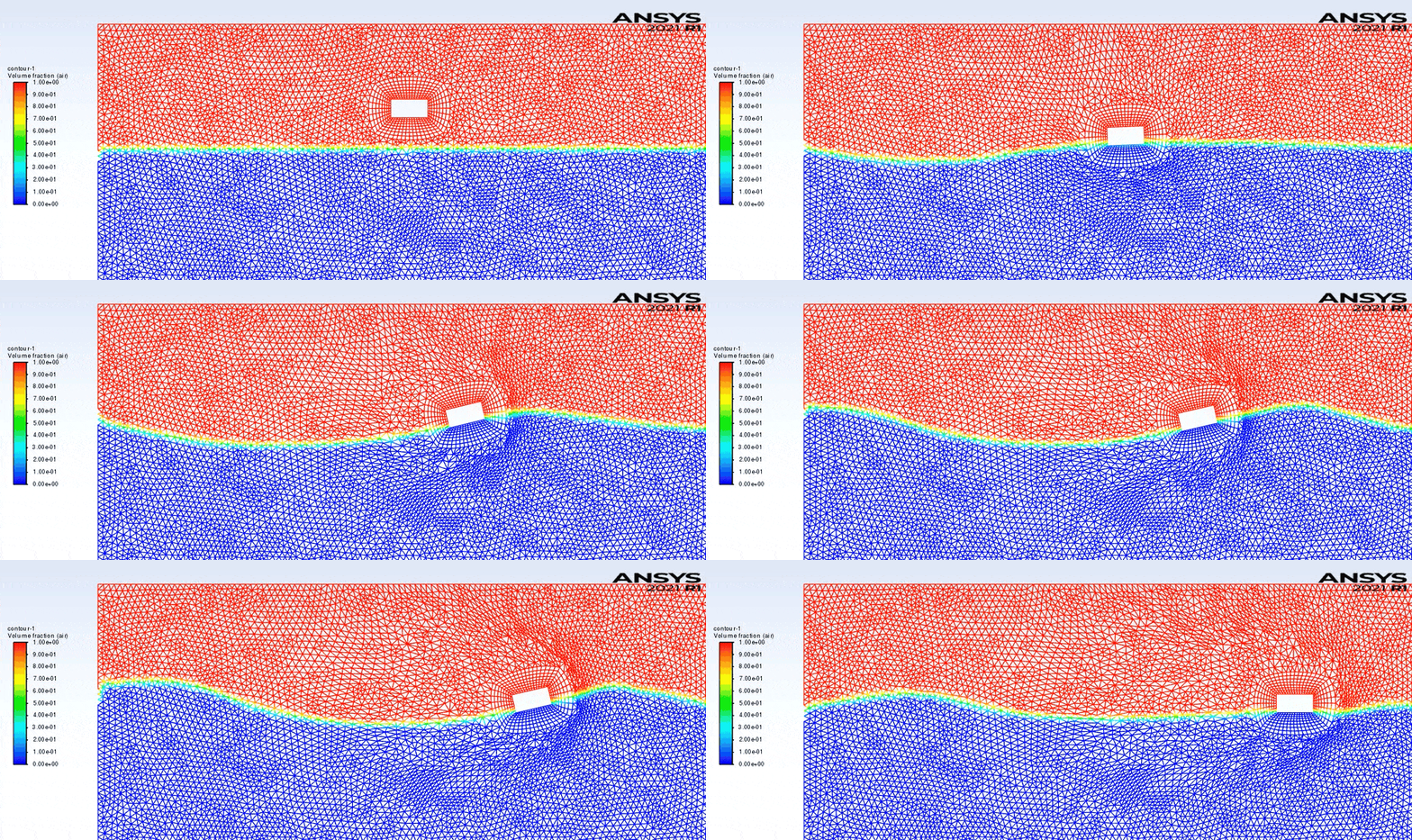 Fluid–Structure Coupling ANSYS Fluent simulation of a solid device interacting with dynamic water surfaces, showing how the device's motion and surface waves couple through the Navier–Stokes flow field. | 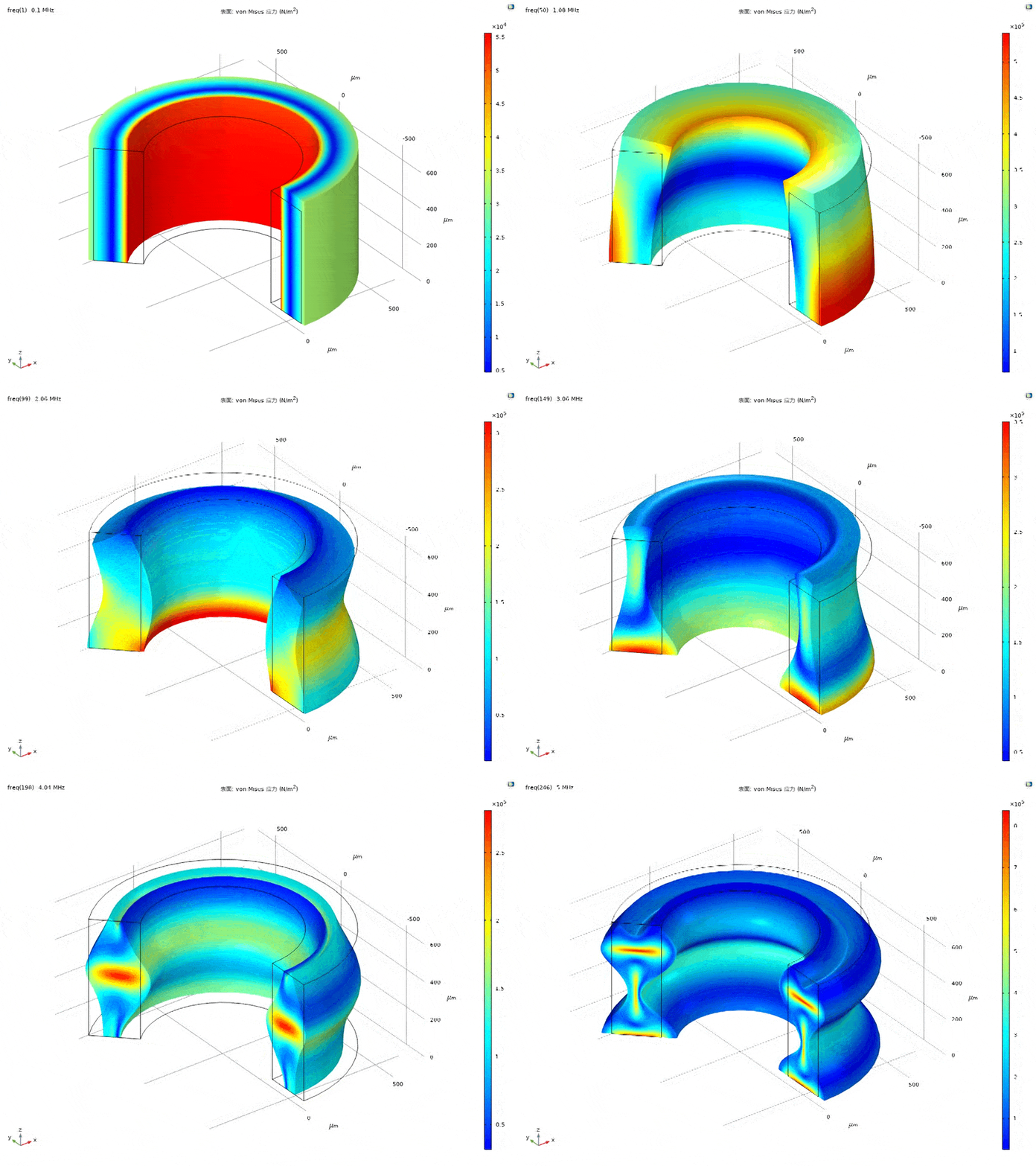 Piezoelectric Stress and Resonance COMSOL simulation of a PZT ring under harmonic excitation, illustrating frequency-dependent stress and displacement patterns. |
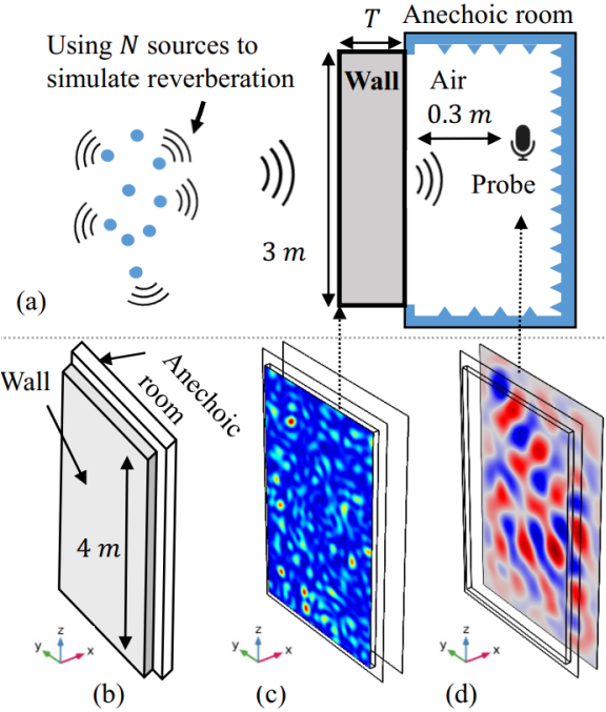 Acoustic Field Propagation COMSOL simulation of frequency-dependent sound transmission loss through a wall, compared with predictions from the Sharp equation. | 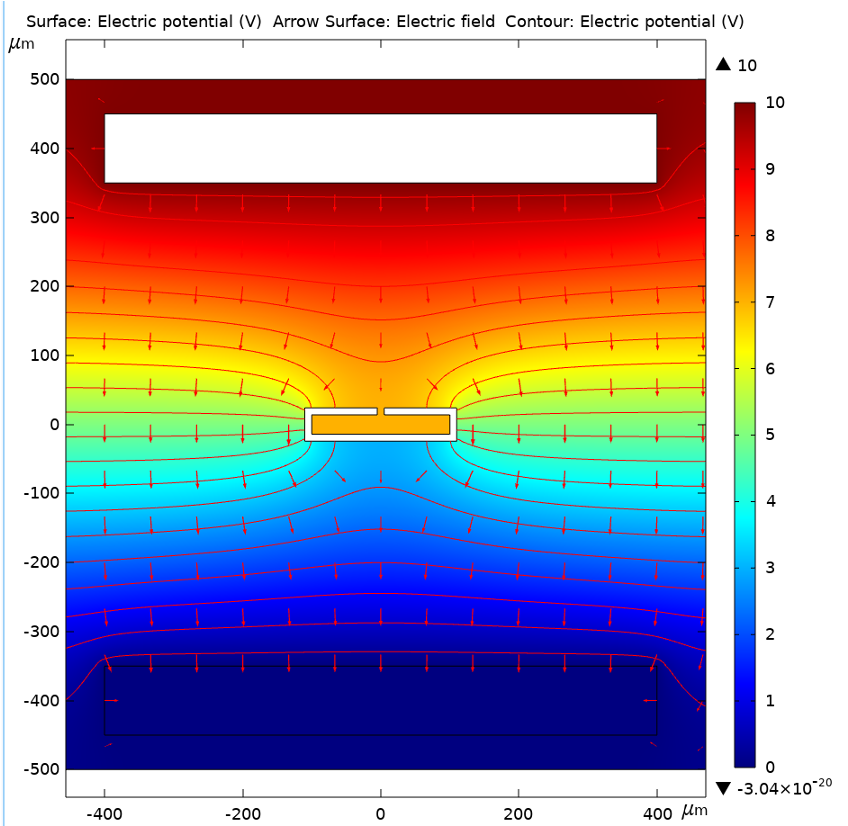 Electric Field Simulation 2D electrostatic potential distribution showing a tiny Faraday shielding and field line deformation. |